

Life after treatment can feel uncertain. Finding the right men’s sober living Orange County home means more than just a roof over your head. At Emergent Sober Living, clear routines, scheduled drug testing, nightly breathalyzer checks, curfews, and house meetings create steady support and accountability. This foundation helps you focus on what matters most: building a calm, stable next step in recovery. For more information, visit Emergent Sober Living.
Structure and Routine at Sober Living Homes
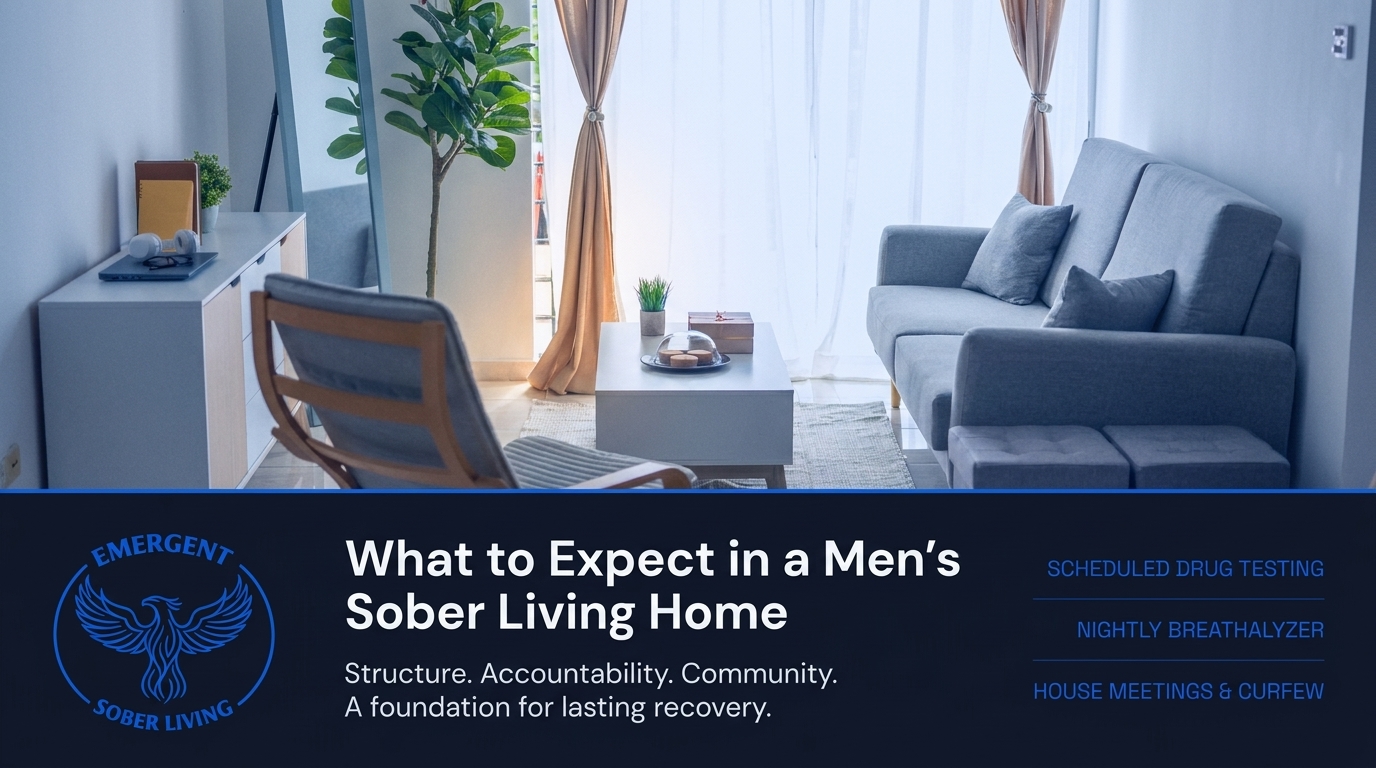
Creating a daily routine can be a game-changer in the recovery process. It fosters predictability and allows you to concentrate on personal growth and healing.
Daily Schedule and Expectations
Each day at a sober living home is structured with purpose. You’ll start your day with morning routines designed to set a positive tone. Simple tasks like making your bed can build a sense of achievement. Throughout the day, you’ll engage in activities that support your recovery journey. This can include group sessions, chores, or quiet reflection time. These routines help create stability, ensuring you’re always moving forward.
Evenings might include community dinners or group discussions. This routine encourages accountability and offers consistent support. By sticking to daily schedules, you build habits that support long-term recovery.
Curfew and Accountability Measures
Curfews are in place to help maintain a safe and secure environment. They’re not there to restrict you but to support your goals. Knowing that you have a set time to be home encourages responsibility. It also ensures a peaceful, focused environment for everyone. Regular check-ins, such as nightly breathalyzer tests, help you stay on track. These measures create a culture of trust and safety.
Having these boundaries allows you to focus on what matters most: your recovery. It’s about building a life where you feel in control and supported.
Importance of House Meetings
House meetings are a cornerstone of community life. They provide a space to share experiences and support each other. During these meetings, you’ll discuss any concerns or suggestions. It’s a chance to voice your thoughts and listen to others. This open communication builds trust and strengthens community bonds.
Participating in house meetings helps you develop communication skills and emotional intelligence. These are essential tools for navigating life beyond sober living. By engaging in these discussions, you learn that you’re not alone in this journey.
Supportive Environment for Recovery

A supportive environment is crucial for recovery. It bolsters your confidence and helps you build meaningful connections.
Building Community Connections
Being part of a community can make all the difference. In a sober living home, you’ll be surrounded by others who understand your journey. This shared experience creates a sense of belonging. You’ll have opportunities to form friendships through group activities and shared responsibilities.
These connections are not just about socializing. They’re a vital part of your recovery process. Having people who understand your struggles can provide comfort and support. It also reinforces the idea that recovery is a journey best traveled together.
Personal Responsibility in Recovery
Recovery is a personal journey, and taking responsibility is key. In a structured environment, you’re encouraged to own your actions. This involves setting personal goals and working towards them. Personal responsibility empowers you to make decisions that support your well-being.
You’ll also learn to hold yourself accountable in a supportive setting. This might involve managing chores or participating in group activities. By taking charge of your actions, you build confidence and resilience.
Navigating Post-Treatment Transition
Transitioning from treatment to sober living can be daunting. Yet, it’s a crucial step in your recovery journey. Sober living homes provide a bridge between treatment and independent living. They offer a stable environment where you can apply what you’ve learned in treatment.
You’ll have access to resources that support your progress. This can include counseling or job search assistance. By focusing on your growth, you prepare for a successful future beyond sober living.
Admissions and Immediate Placement

Knowing what to expect in the admissions process can ease any concerns you might have. It’s about finding the right fit for your needs.
24/7 Support for New Residents
Admissions are open around the clock to accommodate your needs. Whether you’re transitioning from treatment or seeking a fresh start, support is always available. This 24/7 service ensures you can find a place when you’re ready to take the next step. The admissions team will guide you through the process, addressing any questions or concerns.
Having immediate access to support helps you feel secure. It’s reassuring to know that help is just a phone call away.
Drug Testing and Safety Protocols
Safety is a top priority in sober living homes. Regular drug testing ensures a safe environment for everyone. It’s a measure that promotes accountability and helps maintain focus on recovery. These tests are part of the commitment to creating a supportive and drug-free environment.
Knowing these protocols are in place gives you peace of mind. They reinforce the idea that you’re in a place where recovery is the central focus.
Touring and Placement Process
Before moving in, you can tour the facility to ensure it’s the right fit. During the tour, you’ll learn about the daily routines and meet the staff. This transparency helps you make an informed decision about your next steps. It’s an opportunity to see firsthand how the community operates and supports its residents.
When you’re ready, the placement process is straightforward. The team will help you settle in and provide guidance on starting your new journey. It’s about creating a smooth transition into a supportive and structured environment.