


Good intentions can only carry recovery so far. When daily life gets tough, private resolve often needs more than hope—it needs clear, steady support. At Emergent Sober Living, house meetings sober living create a reliable space where men hear expectations, speak openly, and build accountability together. This simple habit turns structure into real stability, giving both residents and their families a quiet confidence that recovery is held by routine, not just motivation. For more on the benefits of house meetings, visit Emergent Sober Living.
The Role of House Meetings

House meetings play a crucial role in maintaining a structured environment for men in recovery. These gatherings ensure everyone stays on the same page and help address any concerns before they become larger issues. By coming together regularly, residents can discuss expectations and reinforce their commitment to sobriety.
Enhancing Accountability in Recovery
In these meetings, accountability takes center stage. Residents, like yourself, find a space to openly share their progress and setbacks. This openness builds a community where everyone feels responsible for the group’s success. Each person sets personal goals and reports back on their progress, creating a cycle of motivation and accountability.
For many, these meetings are where they first experience the power of community support. With shared experiences, everyone learns they are not alone. This sense of belonging can be a game-changer, providing the strength needed to stay committed to recovery. The meetings encourage you to hold yourself accountable not just for your actions but for your role in supporting others.
Building Trust and Consistency
Trust forms the foundation of these meetings, as they provide a safe space for honest conversations. This trust fosters consistency in maintaining routines and expectations, critical for recovery. When you know what to expect and what is expected of you, it reduces anxiety and builds confidence.
The regularity of house meetings reinforces this trust. You learn to rely on the structure and predictability they offer. This consistency becomes a comforting part of daily life, helping you focus on recovery without the distractions of uncertainty. It’s not just about keeping promises; it’s about creating a reliable environment where everyone can thrive.
Structure and Stability in Sober Living

The structured environment of a sober living home is key to creating stability. Consistent routines help residents focus on recovery goals without unnecessary stress. House meetings are a vital part of this structure, allowing issues to be addressed promptly and effectively.
Daily Routines and Expectations
Daily routines in a sober living home are designed to maintain focus on recovery. From wake-up times to chores, these routines build a framework for success. House meetings play an integral role by ensuring everyone understands these expectations.
These meetings are not just about rules; they’re about creating a supportive environment where everyone knows their role. By discussing daily tasks and responsibilities, you and your peers are encouraged to stick to the plan. This keeps the home running smoothly and helps everyone stay focused on their recovery journey.
Addressing Challenges Before They Grow
Challenges are inevitable, but addressing them early can prevent them from escalating. House meetings provide the perfect forum for discussing any issues that arise. By bringing concerns to the group, you can work together to find solutions before they become major problems.
This proactive approach is part of what makes a structured sober living home so effective. By tackling issues head-on, residents learn problem-solving skills that are invaluable both in recovery and beyond. It’s not just about avoiding problems; it’s about equipping yourself with the tools to handle them confidently. For more information on how house meetings help in sober living, check out this article.
Community Support and Connection
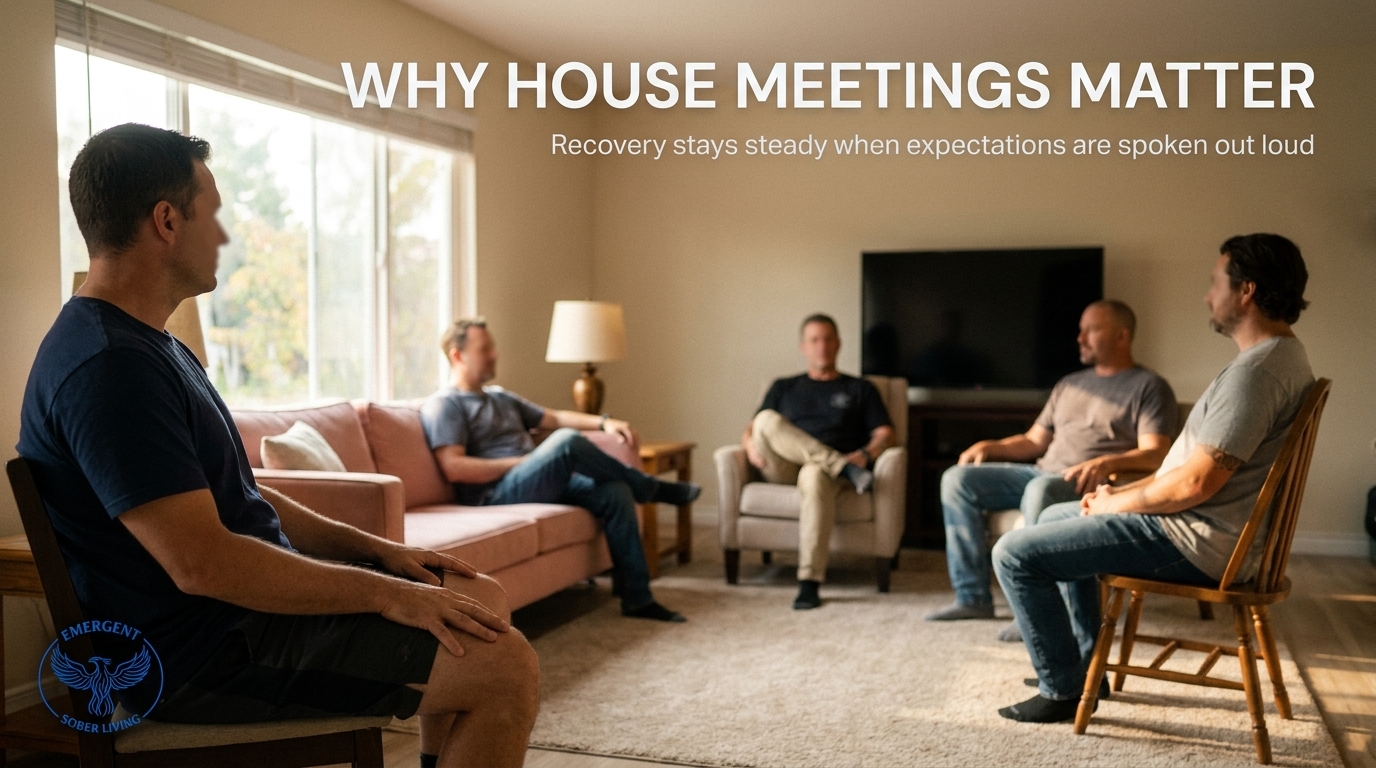
Community support is at the heart of a successful recovery. House meetings foster this by bringing residents together to share experiences and insights. This connection creates a sense of camaraderie that can make all the difference on the road to sobriety.
The Power of Shared Responsibility
In a sober living home, shared responsibility is a cornerstone of recovery. House meetings help reinforce this by giving everyone a voice and a role in the community. When you know you’re part of something bigger, it motivates you to contribute positively.
This shared responsibility extends beyond household chores. It includes supporting each other emotionally and being there when someone needs help. By fostering this environment, house meetings turn a group of individuals into a united front against the challenges of recovery.
Creating a Safe and Supportive Environment
Safety and support are essential in any recovery journey. House meetings create a safe space where everyone feels heard and respected. This supportive environment encourages open dialogue and mutual respect, which are vital for personal growth.
By creating a culture of respect and understanding, house meetings lay the groundwork for a supportive community. Residents learn to rely on each other, knowing they have a network of people who care. This sense of community is crucial, as it provides the support needed to face challenges with confidence. For further reading on the role of community support in recovery, consider this study.
In summary, the structured environment provided by house meetings is key in turning good intentions into lasting recovery. By fostering accountability, trust, and community support, these meetings create a stable foundation for a successful recovery journey.